
Introduction
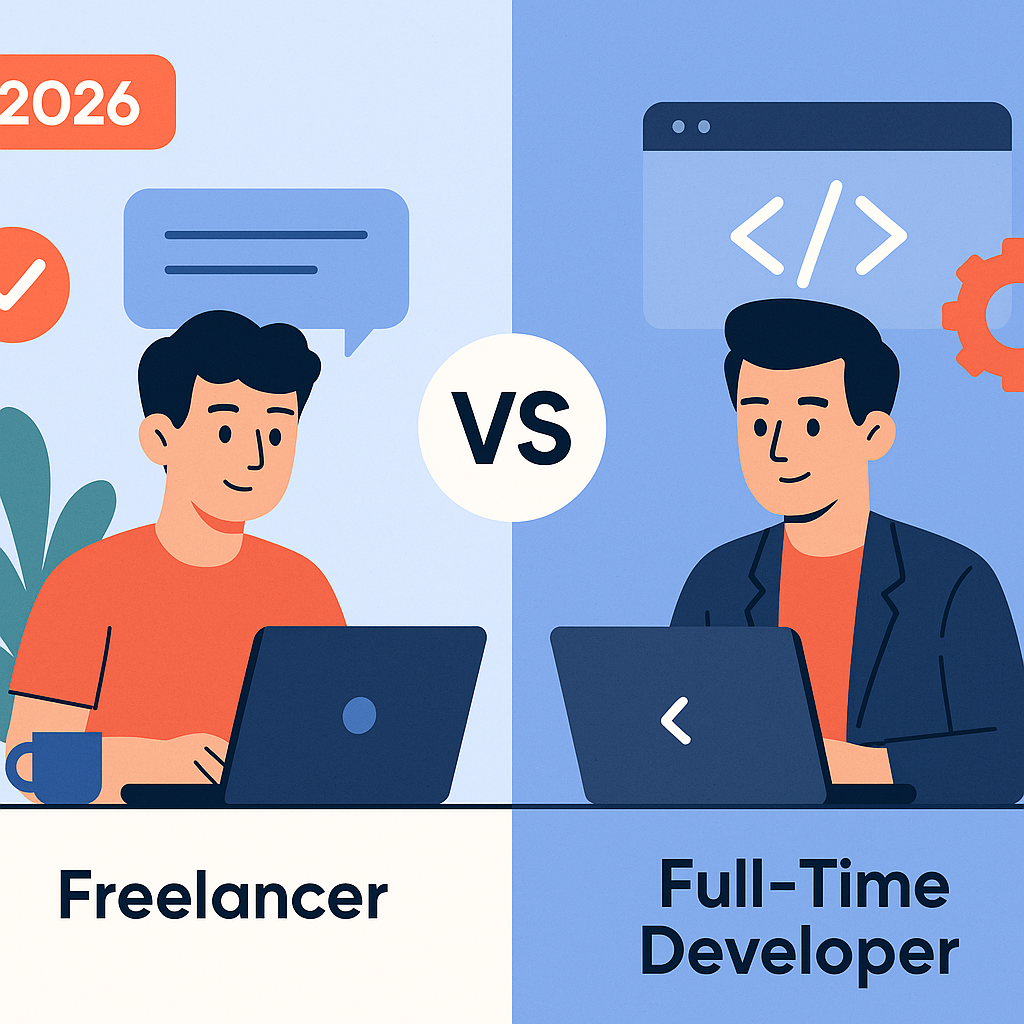
So, you’re thinking about your career path in tech. Should you freelance or go for a full-time job as a developer? Let’s break this down.
The Freelance Life
Freelancers have the freedom to choose their projects and set their own schedules. Sounds amazing, right? But it comes with its own set of challenges.
Pros of Freelancing
- Flexibility: You can work from anywhere. Coffee shops, the beach, or even your couch.
- Variety: You can pick projects that excite you. One week you might build a website, and the next, an app.
- Potentially Higher Pay: Freelancers can often charge more per hour than full-timers, especially if they have niche skills.
Cons of Freelancing
- Inconsistent Income: Some months you might make a lot, others not so much. You need to budget wisely.
- No Benefits: Health insurance, retirement plans, and paid time off are usually on you to figure out.
- Client Management: You’ll spend time finding clients, managing contracts, and sometimes dealing with difficult people.
The Full-Time Developer Path
On the other hand, being a full-time developer offers stability. You have a steady paycheck and benefits, but you trade some freedom for this.
Pros of Full-Time Jobs
- Stable Income: You know exactly how much you’ll earn each month. This makes budgeting easier.
- Benefits: Health insurance, retirement plans, and sometimes even perks like gym memberships or wellness programs.
- Team Environment: You get to work with other developers, which can be great for learning and support.
Cons of Full-Time Jobs
- Less Flexibility: You’ll likely have set hours and a fixed workplace. This could be tricky if you want to travel.
- Limited Project Choice: You may have to work on projects that don’t interest you as much.
- Office Politics: Navigating workplace dynamics can be a challenge, especially in larger companies.
What’s Happening in 2026?
By 2026, the tech landscape is changing. Companies are becoming more remote-friendly. Freelancing is on the rise, especially with platforms like Upwork and Fiverr making it easier to find work.
Freelancing Trends
More developers are choosing to freelance. This trend is driven by:
- Remote Work: Companies are more open to hiring remote freelancers.
- Gig Economy Growth: More people are looking for flexible work arrangements.
- Skill Diversification: Developers are picking up multiple skills to stand out, allowing them to take on varied projects.
Full-Time Job Evolution
Full-time jobs are also changing:
- Hybrid Work Models: Many companies are adopting hybrid work, allowing employees to work from home part of the time.
- Focus on Well-Being: Companies are placing more emphasis on mental health and work-life balance.
- Learning Opportunities: Employers are investing in training and development to keep their teams skilled.
Which One is Right for You?
Choosing between freelancing and a full-time job depends on your personal situation and career goals. Here are some questions to consider:
- Do you prefer stability or flexibility?
- Are you comfortable managing clients and finances?
- How important are benefits like health insurance to you?
- Do you thrive in a team environment, or do you prefer working solo?
Conclusion
Both paths have their ups and downs. Freelancing offers freedom, while full-time jobs provide stability. Think about what matters most to you and how you want to work in 2026.
Whatever you choose, keep learning and adapting. The tech world is always changing, and so can you!







Comments (0)
No comments yet. Be the first to leave a comment!
Verify Your Comment
We sent a 6-digit OTP code to . Please enter the code below to publish your comment.