
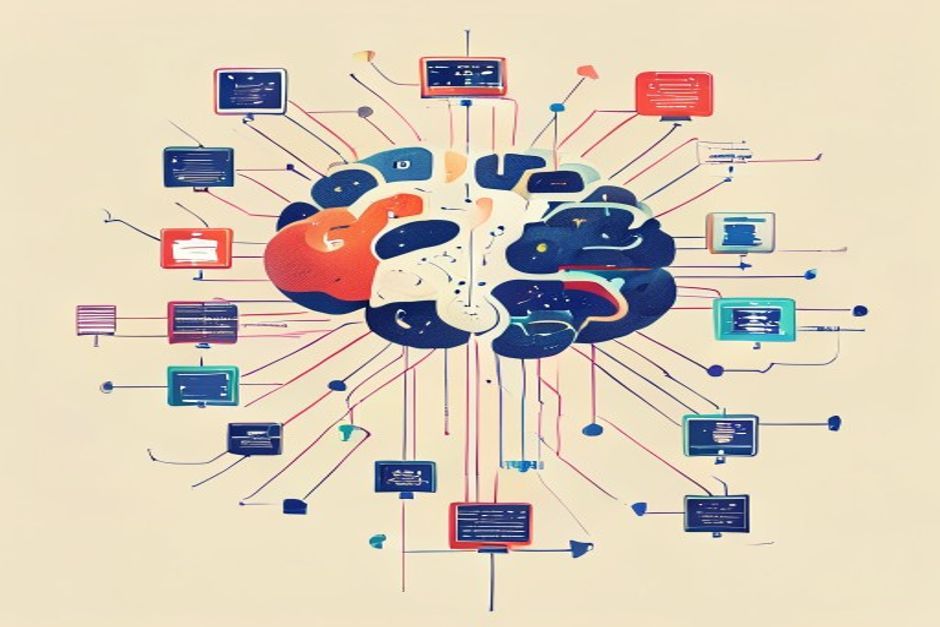
Training powerful AI models usually means gathering massive amounts of data in one place. This approach works well until you hit the wall of data privacy, regulatory compliance, or the sheer logistical and cost nightmare of moving and storing petabytes of sensitive information. Suddenly, that centralized data lake starts looking more like a liability.
This is where Federated Learning (FL) steps in. Instead of bringing all the data to the model, FL brings the model to the data. It's a fundamentally different way to think about AI training when your data sources are distributed and sensitive.
How Federated Learning Works
The core idea of Federated Learning is pretty straightforward: multiple clients (like mobile devices, local servers, or even hospitals) each hold their own local dataset. Instead of sending this raw data to a central server, the central server sends a copy of the global AI model to these clients. Each client then trains the model locally using its own data.
Once local training is done, the clients don't send their data back. They send their model updates – essentially, the changes or improvements they made to the model's parameters – to the central server. The server then aggregates these updates from all participating clients to create an improved global model. This updated global model is then sent back out to the clients for the next round of training. This cycle repeats until the model reaches a desired performance level.
The key here is that the raw, sensitive data never leaves the client device or local environment. The central server only sees aggregated, anonymized model updates, not individual data points.
Why This Approach Matters
Federated Learning isn't just a clever trick; it solves some significant real-world problems:
-
Enhanced Privacy and Compliance: This is the big one. By keeping data local, FL inherently protects user privacy. It helps organizations comply with strict regulations like GDPR, HIPAA, or CCPA, which often restrict the collection and transfer of personal or health data. You can learn from data without seeing it directly.
-
Reduced Bandwidth Requirements: Moving massive datasets across networks is expensive and slow. With FL, only model updates (which are typically much smaller than raw datasets) are transmitted. This is especially useful for edge devices with limited connectivity.
-
Leveraging Edge Data: Many applications generate data at the edge – think mobile phones, IoT devices, or smart home sensors. FL allows models to learn directly from this rich, real-time data without needing to upload everything to the cloud. This can lead to more personalized and context-aware AI experiences.
-
Decentralized Control: In scenarios involving multiple organizations (e.g., medical institutions collaborating on research), FL allows them to contribute to a shared model without any single entity having to hand over control of their proprietary or sensitive data.
The Challenges and Tradeoffs
While the benefits sound great, Federated Learning isn't a silver bullet. There are some serious architectural and operational hurdles:
-
Data Heterogeneity (Non-IID Data): Clients often have data that isn't uniformly distributed or independently identically distributed (non-IID). For example, one phone user might mostly type in English, another in Spanish. This can make model convergence difficult and lead to a global model that performs poorly on specific client data.
-
Communication Overhead: Even if updates are smaller than raw data, frequent communication rounds are still needed. If clients have unreliable network connections or high latency, this can significantly slow down training.
-
Client Selection and Participation: Not all clients might be online or available to participate in every training round. Managing client availability, participation, and dealing with dropouts adds complexity.
-
Security Concerns: While FL protects against central data breaches, it's not immune to other attacks. Gradient inversion attacks, for instance, can sometimes reconstruct raw data from shared gradients. Malicious clients could also send poisoned updates to degrade the global model. Differential privacy or secure aggregation techniques can help, but they add overhead.
-
Debugging and Monitoring: Debugging model issues or monitoring training progress becomes much harder when you can't inspect the raw data or the local training process on individual clients. Understanding why a model isn't converging can be a real headache.
-
Operational Complexity: Deploying, managing, and updating models across a vast, heterogeneous network of client devices is a non-trivial engineering task. It requires robust infrastructure for orchestration, communication, and security.
When to Consider Federated Learning
Given these tradeoffs, Federated Learning isn't a default choice for every AI project. It shines brightest when:
- You're dealing with highly sensitive or regulated data that cannot be centralized.
- Your data sources are naturally distributed across many devices or locations.
- Bandwidth or latency is a significant constraint for data transfer.
- You need to build personalized models that learn from individual user behavior without explicit data sharing.
- You're collaborating across multiple organizations where data silos are a requirement.
Think about scenarios like predictive text on mobile keyboards, health monitoring in wearables, or fraud detection systems that learn from distributed bank data. These are prime candidates for FL.
Looking Ahead
Federated Learning offers a powerful paradigm for scaling AI responsibly, allowing us to build smarter systems while respecting data privacy. It's not a drop-in replacement for traditional centralized training, and the architectural and operational challenges are real. But for specific problems involving sensitive, distributed data, it's quickly becoming an essential tool in the AI engineering toolkit.
I wouldn't reach for this by default, but when the conditions are right – when privacy is paramount and data is inherently decentralized – FL provides a path forward that traditional methods simply can't.





Comments (0)
No comments yet. Be the first to leave a comment!
Verify Your Comment
We sent a 6-digit OTP code to . Please enter the code below to publish your comment.